Oracle’s AI Restructuring Adds $700 Million in Costs as Company Faces Cash-Flow Pressure
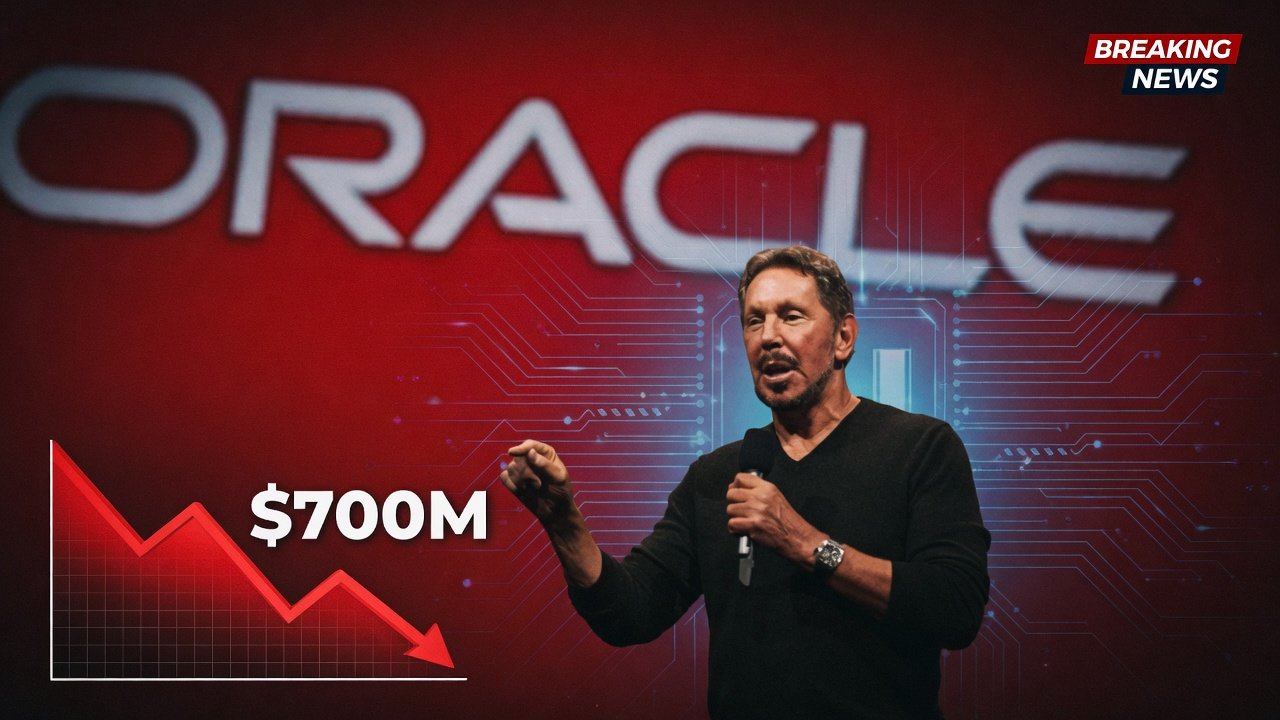
Oracle is expanding its restructuring program by another $700 million as the software giant continues its aggressive transition toward artificial intelligence infrastructure and cloud services.
The additional restructuring costs bring the estimated total cost of Oracle’s fiscal 2026 restructuring plan to approximately $2.8 billion, with job cuts and contract terminations forming a major part of the effort. The move comes as Oracle pours tens of billions of dollars into data centers and AI computing capacity, creating significant pressure on its cash flow.
At the same time, a newly disclosed trading plan shows that Oracle Chairman and co-founder Larry Ellison plans to sell up to 50 million Oracle shares, potentially worth about $7.5 billion based on the reported share price. The planned sales are scheduled to take place by the end of October.
The combination of restructuring, massive AI infrastructure spending and Ellison’s planned stock sales highlights the financial challenges accompanying Oracle’s attempt to establish itself as a major player in the rapidly expanding AI cloud market.
Oracle Adds $700 Million to Restructuring Costs
Oracle initially launched a major restructuring program as it shifted resources toward AI-related businesses.
The company has now disclosed that it expects to spend another $700 million on restructuring, taking the estimated fiscal 2026 total to roughly $2.8 billion. The costs include employee severance and contract terminations.
The restructuring comes after Oracle has already reduced its workforce significantly.
The company is attempting to control costs in areas where spending can be reduced while directing more resources toward cloud infrastructure, AI data centers and related technologies.
This strategy reflects a broader transformation at Oracle, which historically built its business around enterprise software and databases but is now competing aggressively for AI infrastructure demand.
AI Expansion Is Creating a Major Cash-Flow Challenge
Oracle’s AI ambitions require enormous upfront investment.
The company spent approximately $28.5 billion on capital expenditures in its latest quarter, compared with $8.5 billion a year earlier. Oracle has maintained a fiscal 2027 capital expenditure forecast of roughly $90 billion to $95 billion.
That investment is helping Oracle rapidly expand its data-center capacity, but it is also putting pressure on free cash flow.
Oracle reported negative free cash flow of about $5.4 billion for the latest quarter. The company is therefore trying to balance enormous infrastructure requirements with the need to maintain financial flexibility.
The situation illustrates a key challenge facing AI infrastructure providers: demand can be extremely strong, but building the computing capacity required to meet that demand requires billions of dollars before the resulting revenue is fully realized.
Oracle’s AI Business Is Growing Rapidly
Despite the cash-flow pressure, Oracle’s AI and cloud business is showing substantial growth.
Oracle reported that cloud infrastructure revenue increased 121% year over year in the latest quarter. The company also secured more than $30 billion in new AI-related contracts, helping push its remaining performance obligations to approximately $664 billion.
Oracle also brought approximately 850 megawatts of AI computing capacity online during the quarter, demonstrating the scale of its infrastructure expansion.
These numbers suggest that Oracle is benefiting from strong demand for AI computing even as investors remain concerned about the enormous cost of satisfying that demand.
The company’s challenge is therefore not simply generating business. It is building infrastructure quickly enough to capture the opportunity while managing the financing and cash requirements involved.
Larry Ellison’s $7.5 Billion Share Sale Plan
The restructuring announcement also coincides with news of a major stock trading plan involving Larry Ellison.
According to regulatory filings cited by the Financial Times, Ellison established a plan in June allowing him to sell as many as 50 million Oracle shares by the end of October. At the reported Friday closing price of around $150 per share, those shares could be worth approximately $7.5 billion.
Ellison remains Oracle’s largest individual shareholder, with roughly a 40% stake in the company.
The trading plan was established as Oracle was accelerating its investment in AI infrastructure and data centers.
A planned stock sale does not necessarily indicate a lack of confidence in the company. Executives and major shareholders can establish predetermined trading plans for a variety of financial and personal reasons.
However, the timing has attracted attention because Oracle is simultaneously dealing with substantial capital requirements and a negative free-cash-flow position.
Oracle Is Borrowing and Raising Capital for AI Expansion
Oracle’s AI expansion has required the company to explore multiple financing strategies.
The company has said it expects to raise around $40 billion through debt and equity during the fiscal year, while it has already completed a $20 billion stock sale.
Oracle has also experimented with arrangements involving customer prepayments, supplier financing and hardware-sharing agreements to help manage the cost of expanding its AI infrastructure.
Such measures highlight the capital-intensive nature of the AI infrastructure race.
Companies building large-scale data centers need to spend heavily on servers, chips, electricity, cooling systems, land and networking equipment before those investments can generate their full financial returns.
OpenAI Deal Adds to Oracle’s AI Ambitions
Oracle’s transformation has also been accelerated by major AI infrastructure contracts.
The company is involved in a reported $300 billion capacity agreement with OpenAI, making the AI company one of the most important customers in Oracle’s infrastructure expansion.
Oracle has also reported that its new AI contracts extend beyond a single customer, with more than $30 billion in new AI-related bookings during the latest quarter.
That diversification could help reduce concerns about Oracle becoming overly dependent on one or two AI companies.
Still, the scale of its commitments means execution remains critical.
Why the Restructuring Matters
Oracle’s restructuring demonstrates the difficult economics behind the current AI boom.
On one side, demand for AI computing is exploding. Oracle’s cloud infrastructure business is growing rapidly, and its contract pipeline has reached hundreds of billions of dollars.
On the other side, building the infrastructure needed to support that demand requires enormous amounts of capital.
Oracle is therefore trying to restructure parts of its traditional business while simultaneously spending aggressively on its AI operations.
The additional $700 million restructuring charge is effectively part of that broader transition.
What Comes Next for Oracle
Oracle’s future performance will depend heavily on whether its AI investments eventually generate sufficient cash flow to justify their scale.
The company has strong demand, rapidly expanding cloud infrastructure revenue and a massive contract backlog. However, its capital expenditure requirements and negative free cash flow remain significant concerns for investors.
Oracle’s upcoming AI-focused events and future financial results will provide more information about how quickly its infrastructure investments are translating into sustainable profitability.
For now, the company appears committed to spending heavily to capture a larger share of the AI infrastructure market while cutting costs elsewhere.
The $700 million increase in restructuring costs and Larry Ellison’s newly disclosed share-sale plan underscore the financial complexity of that strategy.
Oracle is betting that today’s enormous AI infrastructure spending will create a much larger and more valuable cloud business in the years ahead.
Frequently Asked Questions
Why is Oracle spending another $700 million on restructuring?
Oracle is adding $700 million to its restructuring costs as it reorganizes the business around AI and cloud services. The additional amount brings the projected fiscal 2026 restructuring cost to approximately $2.8 billion.
Is Oracle laying off employees because of AI?
Oracle’s restructuring includes job cuts, while the company is simultaneously shifting resources toward AI infrastructure and cloud services. The restructuring is part of a broader effort to control costs as Oracle dramatically increases AI-related spending.
How much is Oracle spending on AI infrastructure?
Oracle spent about $28.5 billion in capital expenditures during its latest quarter and has maintained a fiscal 2027 capital expenditure outlook of approximately $90 billion to $95 billion.
What is Larry Ellison’s Oracle stock trading plan?
Regulatory filings indicate that Larry Ellison has a plan allowing him to sell up to 50 million Oracle shares by the end of October 2026. At the reported $150 share price, the shares could be worth about $7.5 billion.
Is Oracle’s AI business growing?
Yes. Oracle reported a 121% year-over-year increase in cloud infrastructure revenue and more than $30 billion in new AI-related contracts in its latest quarter.
Why is Oracle facing cash-flow pressure?
Oracle is spending enormous amounts on data centers and AI infrastructure. Although its AI and cloud businesses are growing rapidly, the upfront capital requirements have pushed the company into negative free cash flow as it expands capacity.