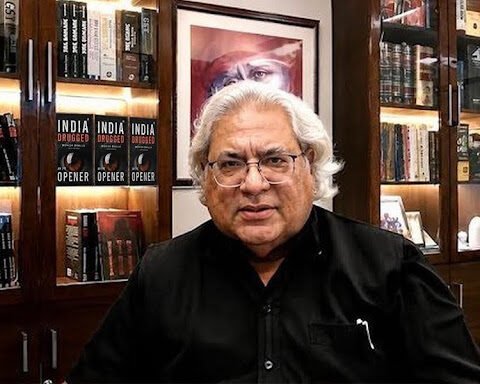
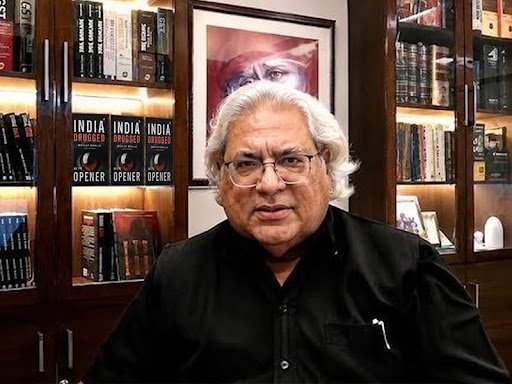
India’s drug problem is no longer only a matter of policing, border control or seizures. It has become a social, public-health and national-security challenge that reaches families, campuses, communities and, increasingly, the larger debate on organised crime and terror financing. Few voices have approached the issue from as many directions as Dr Monish Bhalla, a former Narcotics Control Bureau officer, author, researcher, columnist and television commentator who has spent decades studying the narcotics landscape from both the enforcement and public-policy sides.
Bhalla’s engagement with the subject began from inside the system. His years in government exposed him to the operational realities of narcotics control: trafficking routes, concealment methods, organised networks, enforcement gaps and the human consequences of addiction. Over time, that experience moved beyond official work and developed into writing, research, public awareness and policy advocacy.
His book India Drugged – An Eye Opener sought to explain the scale and seriousness of drug abuse in India in language accessible to the wider public. It examined not only trafficking and enforcement but also addiction, vulnerability among young people, social consequences and the need for a coordinated national response.
That concern acquired a sharper national-security dimension in his later book, Narco Jihad – When Drugs Fund Terror. The book explores the intersection of narcotics trafficking, organised crime, illicit finance and terrorism, and argues that the drug trade cannot always be treated merely as a commercial crime. In certain circumstances, the proceeds of narcotics can strengthen hostile networks, finance violence and undermine national security.
The work received acknowledgement and appreciation from several senior public and defence figures, including Uttar Pradesh Chief Minister Yogi Adityanath, Chief of Defence Staff General Anil Chauhan, Chief of the Naval Staff Admiral D. K. Tripathi and Union Minister Dharmendra Pradhan. For Bhalla, however, such recognition is less an end in itself than an opportunity to keep the national conversation focused on a problem that continues to evolve.
His central argument today is simple: India cannot fight drugs only by intercepting supply.
Every seizure is important. Every trafficker arrested matters. Every syndicate dismantled is a success. But Bhalla repeatedly returns to the economics of the illegal drug market: as long as there is sustained demand, someone will attempt to create a supply. If one route is blocked, another may emerge. If one network collapses, another may try to take its place. Enforcement must therefore remain relentless, but it must be matched by an equally serious effort to reduce the number of people entering the cycle of drug consumption.
This is where Bhalla’s advocacy increasingly connects with the Nasha Mukt Bharat mission. He believes India must invest much more deeply in prevention, awareness, counselling, de-addiction, rehabilitation and after-care, with special attention to schools, colleges, families and vulnerable communities. In his view, drug control cannot remain the responsibility of enforcement agencies alone; it has to become a broader social movement.
He has also begun pressing for a larger role for corporate India. His proposal is that drug awareness, prevention, de-addiction, rehabilitation and after-care should receive explicit recognition within the Corporate Social Responsibility framework, and that Nasha Mukt Bharat should become a clearly identified national CSR priority. The idea is not merely to fund rehabilitation centres, but to create sustained programmes for awareness, counselling, treatment, skill development, reintegration and relapse prevention.
That proposal flows naturally from the larger arc of Bhalla’s work. He began by seeing the drug problem through the eyes of an enforcement officer. He then examined it as an author and researcher. Today, he is increasingly asking what policy changes can make the fight against drugs more preventive, more socially rooted and more sustainable.
His message is straightforward: stop the drugs, punish the traffickers and dismantle the networks—but also reduce the demand that keeps those networks profitable.
For India’s anti-drug campaign, that may be the next frontier.