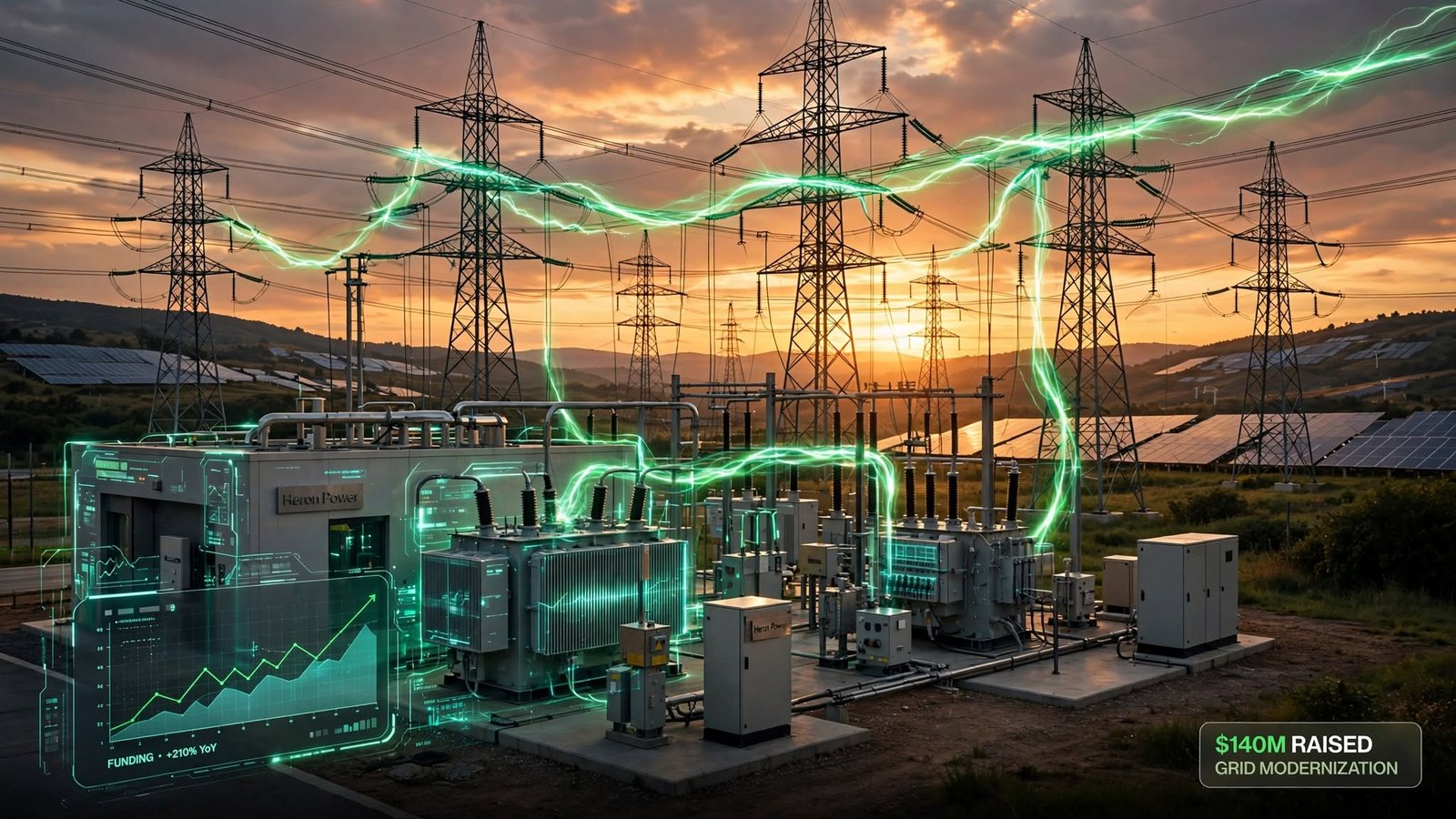
Clean-Energy Grid Funding: Heron Power Raises $140 Million to Modernize the Power Grid
Clean-Energy Grid Funding is gaining momentum as investors put more capital behind technologies designed to strengthen and modernize electricity infrastructure. One of the latest examples is Heron Power, an energy infrastructure company that announced a $140 million Series B financing round co-led by Andreessen Horowitz and Breakthrough Energy Ventures.
The funding highlights growing investor interest in technologies that can help the electricity system handle rising demand, new sources of generation and increasingly complex grid requirements.
Heron Power Secures $140 Million Series B
Heron Power’s latest financing totals $140 million and was co-led by Andreessen Horowitz and Breakthrough Energy Ventures.
The company describes its mission around building the next generation of power-grid infrastructure. The investment gives Heron Power additional capital to develop and scale its technology as electricity systems face increasing pressure from electrification and rapidly expanding power demand.
The deal also demonstrates how venture capital is increasingly moving beyond renewable-energy generation itself and toward the infrastructure needed to connect, manage and distribute electricity.
Why Grid Infrastructure Is Becoming a Major Investment Theme
The transition toward cleaner electricity depends on much more than solar panels, wind farms and battery storage.
Power grids need equipment and software capable of managing changing supply and demand while maintaining reliability. The growth of data centers, artificial intelligence infrastructure, electric vehicles and industrial electrification is adding another layer of complexity.
Andreessen Horowitz has previously highlighted the changing structure of the U.S. electricity system, including the distinctive role of the Texas grid and the broader need for investment in grid infrastructure.
That makes companies working on grid modernization increasingly relevant to the wider clean-energy economy.
AI and Data Centers Are Increasing Electricity Demand
One of the biggest forces behind the renewed focus on power infrastructure is the rapid expansion of artificial intelligence.
Large data centers require enormous amounts of electricity, and their growth can place significant pressure on local transmission and distribution systems.
This creates a difficult infrastructure challenge: technology companies can build computing capacity relatively quickly, while new transmission lines, substations and other electricity infrastructure can take substantially longer to plan and construct.
As a result, investors are increasingly looking for technologies that can make existing grid infrastructure more flexible and efficient while supporting additional capacity.
Clean-Energy Funding Is Moving Toward the Infrastructure Layer
The Heron Power investment reflects a broader shift in the clean-energy funding landscape.
Earlier waves of climate-tech investment focused heavily on renewable generation, electric vehicles and batteries. Increasingly, investors are also backing the infrastructure underneath those technologies.
That includes:
- Grid modernization
- Power electronics
- Energy storage
- Transmission technology
- Distributed energy systems
- Grid-management software
- Microgrids
- Infrastructure for large electricity consumers
This infrastructure layer can become increasingly important as electricity demand grows.
Texas Remains a Key Energy Technology Market
Texas is particularly important to the discussion because it operates its own major electricity grid, managed by ERCOT.
The state’s rapidly growing population, industrial activity, renewable generation and data-center development have created significant interest in how electricity supply and demand can be balanced.
Andreessen Horowitz has specifically discussed the unique structure of the Texas electricity system and the opportunities surrounding decentralized and modernized grid infrastructure.
That broader environment has helped make Texas an important market for energy startups and infrastructure innovation.
How the Funding Could Support Heron Power
The new capital is expected to support Heron Power’s continued development and expansion of its grid technology.
For investors, the opportunity extends beyond a single clean-energy application. Modern electricity infrastructure could become a foundational requirement for several rapidly growing industries.
AI data centers, electric transportation, industrial electrification and renewable power generation all require reliable electricity infrastructure.
As these sectors expand simultaneously, technologies capable of improving grid capacity and flexibility could become increasingly valuable.
The Broader Clean-Energy Investment Trend
Heron Power is not the only company attracting significant capital in the energy infrastructure sector.
Grid intelligence startup GridCARE, for example, announced a $64 million Series A in May 2026 to scale its technology for improving grid capacity and electricity infrastructure.
These investments indicate that venture capital is increasingly treating the electricity grid as a technology market in its own right.
The trend is significant because grid modernization can support both conventional electricity systems and the transition toward cleaner energy.
Why Investors Are Watching Power Infrastructure
Several long-term trends are converging around the electricity grid.
First, electricity demand is rising as transportation, heating and industrial processes become more electrified.
Second, renewable energy sources can create more variable electricity production, increasing the importance of flexible grid management.
Third, AI and data-center development are creating concentrated pockets of very high electricity demand.
Finally, aging infrastructure needs modernization in many parts of the United States.
Together, these factors create a large potential market for companies developing new power-management and grid technologies.
What This Means for the Clean-Energy Sector
The latest funding wave suggests that the clean-energy transition is becoming increasingly focused on infrastructure.
Generating clean electricity is only one part of the challenge. That electricity must also be transmitted, distributed, stored and managed efficiently.
Companies working in these areas could therefore play a critical role in supporting the next phase of the energy transition.
For venture investors, this creates an opportunity to back businesses that sit between traditional utilities and emerging technologies such as AI, batteries and distributed energy.
The Road Ahead for Grid Technology
The $140 million Heron Power financing is another signal that investors see substantial opportunities in modernizing the electricity system.
While renewable generation remains an important part of the energy transition, the grid itself is becoming an equally important investment category.
As electricity demand continues to rise, technologies that improve reliability, flexibility and capacity could become essential to supporting America’s next generation of digital and industrial growth.
The broader clean-energy investment story is therefore moving beyond producing more power toward building a smarter and more resilient system capable of delivering that power where it is needed.
Frequently Asked Questions
What is the latest Clean-Energy Grid Funding deal?
One of the latest major deals is Heron Power’s $140 million Series B financing, co-led by Andreessen Horowitz and Breakthrough Energy Ventures.
Did GridFlow raise $150 million from Andreessen Horowitz?
I could not verify a reliable announcement matching those details. The verified transaction matching the description most closely is Heron Power’s $140 million Series B.
What does Heron Power do?
Heron Power is an energy infrastructure company focused on developing next-generation technologies for the power grid.
Why is grid modernization becoming important?
Electricity demand is increasing because of data centers, AI, electrification and industrial growth, while renewable energy is adding new requirements for managing electricity supply and demand.
Who co-led Heron Power’s Series B?
The $140 million Series B was co-led by Andreessen Horowitz and Breakthrough Energy Ventures.
Why is Texas important for energy technology?
Texas operates a distinctive electricity system through ERCOT and has experienced significant growth in renewable energy, industrial activity and electricity demand, making it an important market for grid innovation.