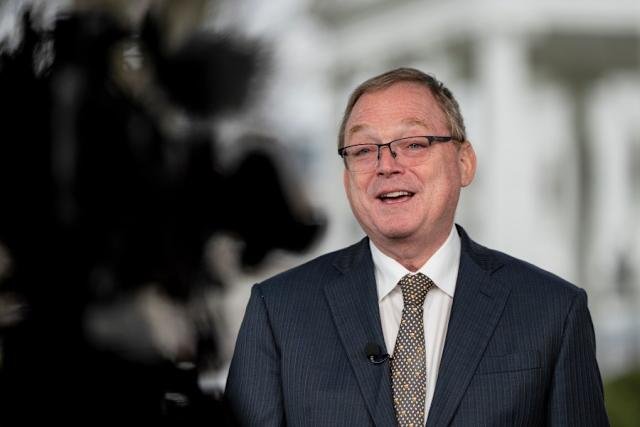
As tensions rise between policymakers and major financial institutions, White House economic advisor Kevin Hassett is signaling a potential shift in how the administration plans to tackle soaring credit card costs. In what could become a more targeted approach, Hassett considers strategic “Trump cards” as banks clash over credit card rates, moving away from sweeping industry-wide mandates and toward voluntary solutions.
A Softer Alternative to Interest Rate Caps
Last week, President Donald Trump reignited debate across the financial sector by urging banks to cap credit card interest rates at 10 percent. The proposal was swiftly rejected by banking executives and industry lobbyists, who warned that such a move could disrupt lending, shrink access to credit, and force banks to close customer accounts rather than absorb lower returns.
Instead of pushing for legislation that would be difficult to pass and risky for the broader economy, Hassett — director of the National Economic Council — has outlined a narrower plan. His idea focuses on Americans who lack access to credit despite having steady income and financial stability.
Speaking on Fox Business, Hassett explained that banks could voluntarily extend credit cards to this underserved group. The goal would be to provide affordable access without imposing rigid caps across the entire market.
“These are people who don’t have much financial leverage simply because they’ve never had credit,” Hassett said, adding that they are nevertheless “worthy of credit” based on income and life stability.
Voluntary “Trump Cards” Instead of Legislation
Hassett suggested that this initiative may not require new laws at all. According to him, banks could introduce special credit products — informally dubbed “Trump cards” — designed to expand access without destabilizing the system.
“Our expectation is that it won’t necessarily require legislation,” he said, “because there will be really great new ‘Trump cards’ presented for folks that are voluntarily provided by the banks.”
This language hints at a strategic retreat from the administration’s earlier push for a universal rate cap. Analysts believe the White House may be recognizing the political and economic risks tied to forcing broad changes in the credit card industry.
Industry Pushback Remains Strong
Bank leaders have made their stance clear. During recent fourth-quarter earnings calls, executives warned that enforcing a 10 percent ceiling would lead them to shut down large numbers of accounts rather than offer low-interest cards at a loss. Such closures could sharply reduce consumer spending and slow economic activity.
When asked whether banks might be compelled to comply with the proposed cap, Hassett acknowledged that legislation would likely be required — and that the administration is now in conversations with top banking CEOs.
He said several industry leaders believe “the president’s onto something,” but concrete plans remain elusive.
In fact, both a major credit card issuer and a lobbyist for large lenders told CNBC they have not yet discussed the “Trump card” concept with the administration.
A Tactical Shift in a High-Stakes Debate
For now, the White House appears to be testing a compromise: encourage banks to expand access to credit voluntarily rather than force sweeping rate controls that could backfire. Whether these strategic “Trump cards” materialize — and whether banks embrace them — remains uncertain.
What is clear is that Hassett considers strategic “Trump cards” as banks clash over credit card rates, marking a notable pivot in an increasingly charged debate over affordability, access, and the future of consumer credit in the United States.